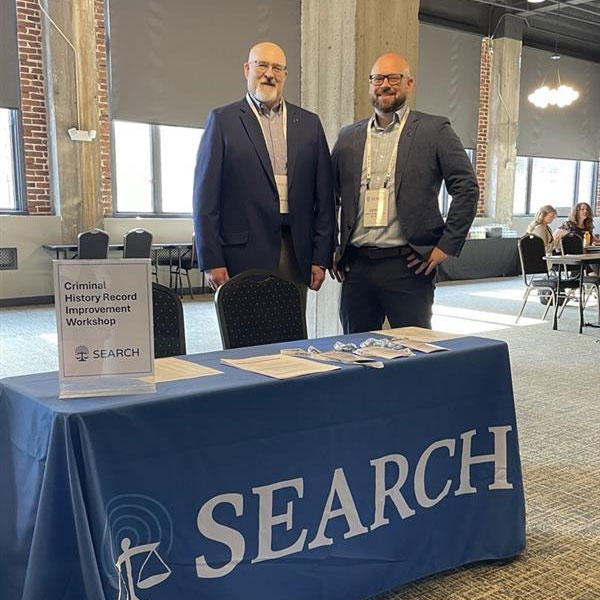
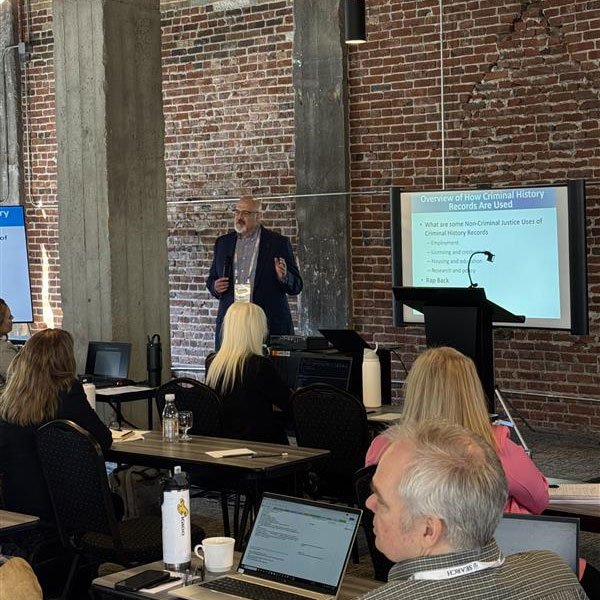
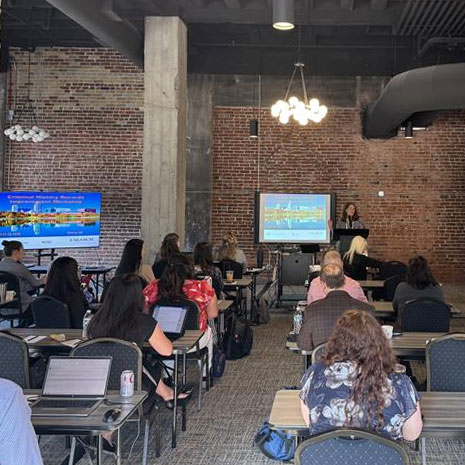
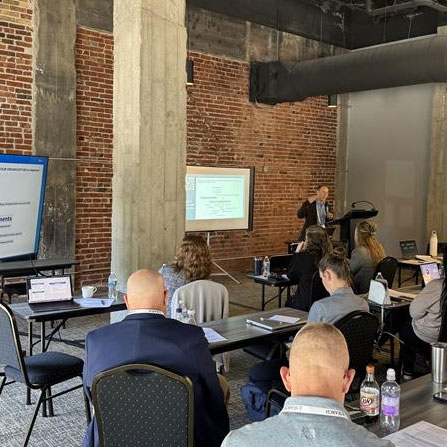
SEARCH, in collaboration with the National Center for State Courts (NCSC), successfully convened the Midwest 2026 Criminal History Record Improvement Workshop on April 21–22, 2026, in Omaha, Nebraska. The one-and-a-half day event brought together criminal justice stakeholders from across the region to advance shared efforts to strengthen the completeness, accuracy, and timeliness of criminal history records—particularly disposition reporting.
The workshop is part of a broader, multi-year national initiative to improve criminal history reporting systems and practices. Financial support for the workshop was provided by the Bureau of Justice Statistics (BJS), whose continued investment makes these collaborative, practitioner-driven events possible.
Strengthening the National Foundation of Criminal History Data
State criminal history repository managers play a critical role as stewards of criminal history information, serving as the central point for receiving, validating, maintaining, and disseminating records relied upon for employment, licensing, and volunteer screening, as well as firearms background checks and a wide range of justice system and public safety decisions.
Throughout the workshop, participants explored practical strategies to address common reporting challenges, improve data quality controls, refine reporting workflows, and navigate technical and policy considerations that affect the transmission of disposition information into state repositories. Sessions emphasized the importance of system interoperability and cross-agency coordination in ensuring records accurately reflect final case outcomes.
Courts as Essential Partners
Courts were highlighted as indispensable partners in criminal history improvement, as they generate the disposition information that ultimately completes a criminal history record. Through SEARCH’s ongoing collaboration with the National Center for State Courts, the workshop elevated the courts’ critical role and brought national court expertise directly into the conversation. Discussions emphasized the importance of strong, sustained collaboration among repository staff, court administrators, and court IT and operations teams to ensure disposition data is complete, accurate, and transmitted in a timely manner.
The workshop benefited from robust participation by repository managers, court IT staff and administrators, and NCSC leadership and subject-matter experts. This cross-
disciplinary engagement fostered candid, solution-oriented dialogue and reinforced a shared commitment to advancing courts as essential partners in criminal history record improvement nationwide.
Engaged Stakeholders and Meaningful Dialogue
A recurring theme of the workshop was the high level of engagement among attendees and the value of bringing diverse perspectives into the same room. As SEARCH Executive Director Derek Veitenheimer noted:
“The level of engagement from stakeholder partners throughout the workshop was outstanding. Meaningful progress happens when repositories, courts, and justice system partners can openly share challenges, learn from one another, and work toward practical solutions together.”
SEARCH also extends its thanks to the Federal Bureau of Investigation’s NICS Section for participating in the workshop and contributing to discussions on the role of criminal history records in firearms background checks. The FBI’s perspective reinforced the national importance of complete and timely disposition reporting in supporting lawful and effective background check processes.
Looking Ahead
The Midwest 2026 workshop provided a valuable forum for collaboration, knowledge-sharing, and renewed commitment to improving criminal history record systems. By strengthening data quality and interagency coordination, participants took meaningful steps toward ensuring criminal history records accurately reflect case outcomes and can be relied upon for critical justice and public safety decisions. SEARCH looks forward to continuing this important work with its criminal justice partners nationwide.