
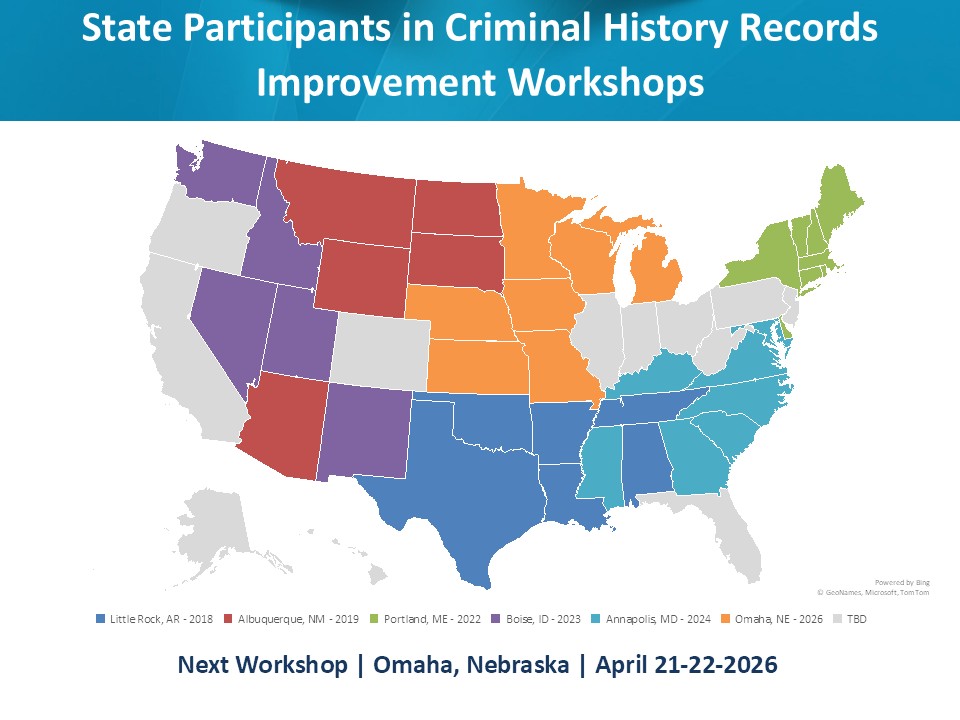
SEARCH, in collaboration with the National Center for State Courts (NCSC), will host a Midwest 2026 Criminal History Record Improvement Workshop on April 21–22, 2026, in Omaha, Nebraska. This regional workshop, the sixth in a series, is part of an ongoing, multi-year effort to strengthen criminal history reporting nationwide. The Omaha workshop will bring together state repository managers, courts, and justice system partners from seven states to improve the completeness, accuracy, and timeliness of records, with a focus on court dispositions. Including the Omaha workshop, 38 states will have participated in these workshops.
Around the country, repository managers serve as the central stewards of criminal history data—responsible for receiving, validating, maintaining, and disseminating records that are relied upon for employment, licensing and volunteer screening, firearms background checks, in addition to a wide array of justice and public safety decisions.
Given this critical role, the workshop emphasizes strategies that support repositories in addressing common reporting challenges, enhancing data integration, and strengthening coordination with contributing agencies. Sessions will explore data quality controls, reporting workflows, and technical and policy considerations that affect the flow of disposition information into the repository.
Courts are recognized as key partners in this process, as they generate the disposition data that feeds the criminal history repository. Effective collaboration between repository staff and courts—along with court IT and operations teams—is essential to ensure disposition information is complete, accurate, and transmitted in a timely manner.
Participation is encouraged from criminal history repository managers, court IT staff and administrators, prosecutors and law enforcement, who are support disposition reporting and case management systems.
This workshop offers an important opportunity for criminal history repository managers and their criminal justice partners to work collaboratively toward shared goals—strengthening data quality, improving system interoperability, and ensuring criminal history records accurately reflect case outcomes.
