
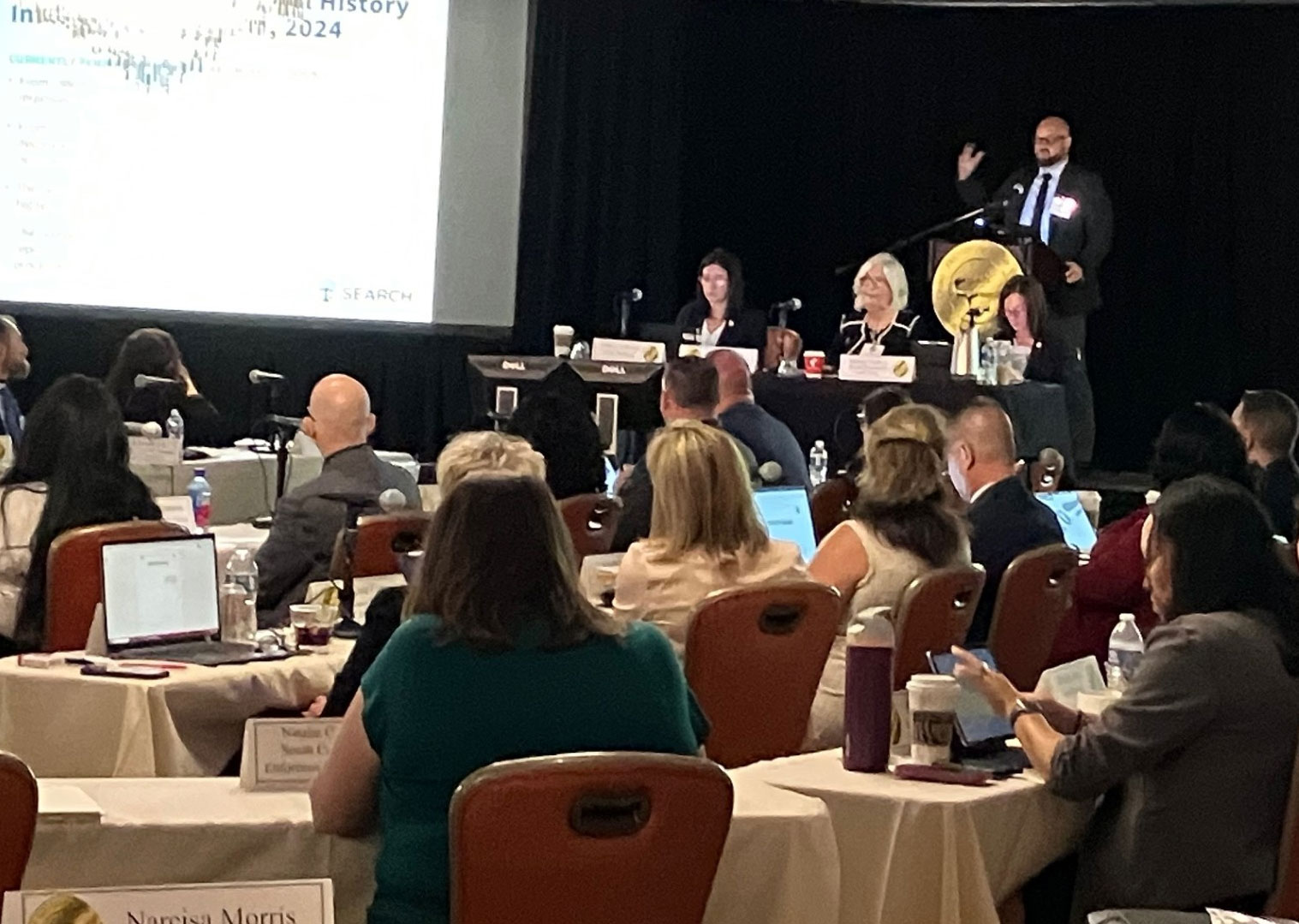
 During the May 7 meeting of the FBI’s Compact Council, SEARCH Executive Director Derek Veitenheimer provided an overview of SEARCH’s ongoing efforts to strengthen criminal history record systems and support states in meeting both policy and operational demands.
Executive Director Veitenheimer emphasized the critical importance of high-quality, complete, and accessible criminal history records—not only for criminal justice decision-making, but also for noncriminal justice purposes such as licensing, employment background checks, and firearm purchases. In this context, he highlighted the essential role of the FBI Compact Council, which establishes the rules governing the use and exchange of criminal history record information for noncriminal justice purposes nationwide. The Council’s work ensures that this sensitive information is shared appropriately, securely, and consistently across jurisdictions, helping to build trust in the systems relied upon by employers, licensing agencies, and background check programs like the FBI’s National Instant Criminal Background Check System (NICS).
A key focus of Executive Director Veitenheimer’s remarks was SEARCH’s collaboration with the Bureau of Justice Statistics (BJS) and the National Center for State Courts (NCSC) to deliver a series of regional Criminal History Records Improvement Workshops. These workshops bring together multidisciplinary teams—including repository managers, courts, law enforcement, prosecutors, and corrections officials—to address persistent challenges and identify practical solutions for improving data quality and information sharing.
“These sessions are invaluable in helping states move from identifying challenges to implementing actionable solutions,” noted SEARCH Law and Policy Director Becki Goggins. “They also foster the kind of collaboration needed to ensure criminal history records are as complete and accurate as possible.”
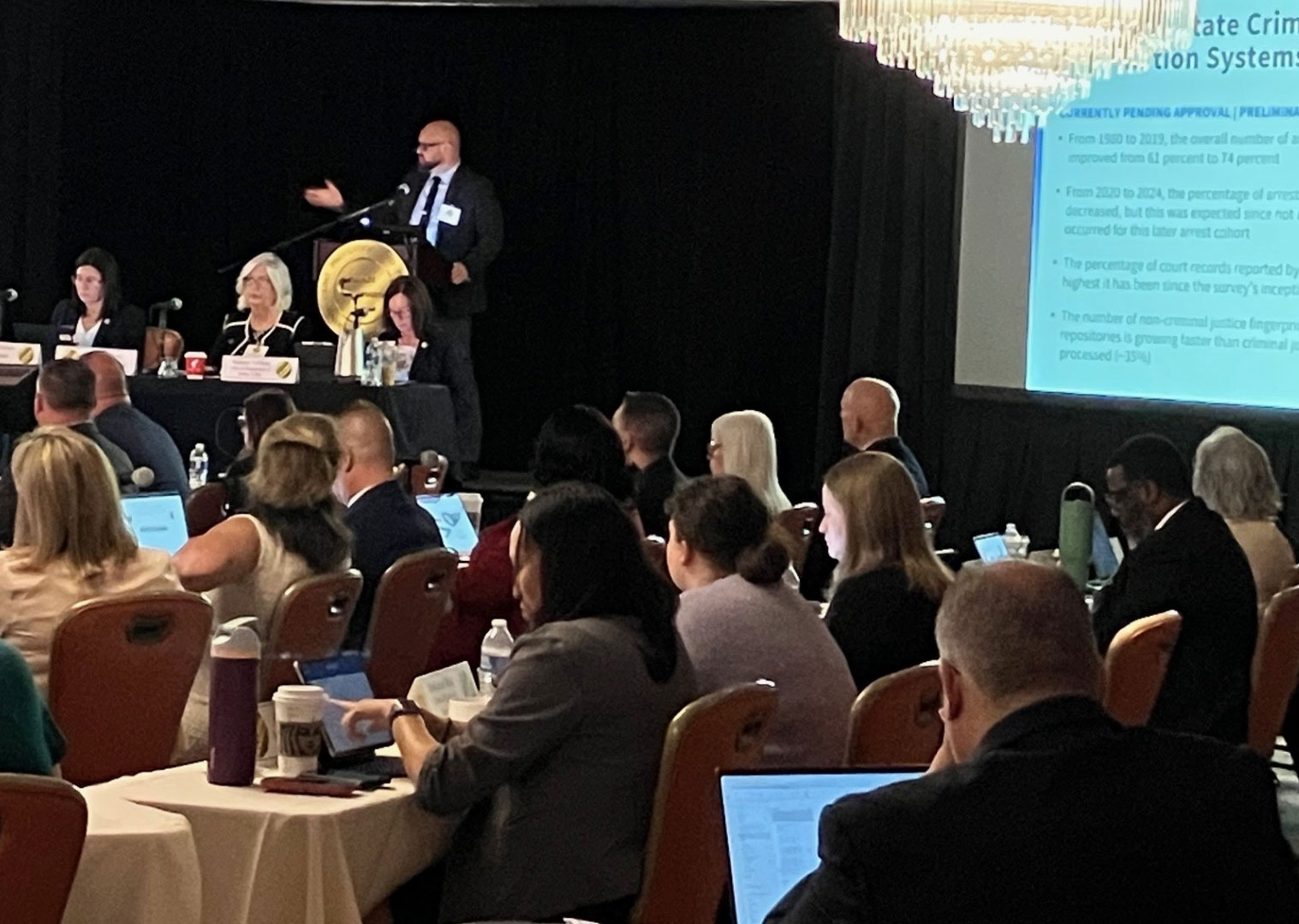 Executive Director Veitenheimer also underscored the importance of SEARCH’s biennial Survey of State Criminal History Information Systems, which provides a national snapshot of state capabilities, trends, and gaps. This resource supports policymakers, practitioners, and federal partners in understanding where investments and improvements are most needed.
In addition, he highlighted SEARCH’s partnership with the Clean Slate Initiative, which is increasingly important as states adopt legislation to seal certain criminal records. SEARCH’s work in this area focuses on ensuring that states have the data, technical infrastructure, and policy guidance necessary to implement record sealing effectively and accurately—balancing opportunities for individuals with the need to maintain reliable records for authorized uses.
Across all of these efforts, a consistent theme emerged: the central role of criminal history records as a shared national asset. Whether used to inform public safety decisions, determine eligibility for employment or professional licenses, or conduct firearms background checks, these records must be timely, complete, and governed by clear standards.
Executive Director Veitenheimer’s presentation reinforced SEARCH’s longstanding mission—dating back to 1969—to support states through research, technical assistance, and convenings that drive measurable improvements. It also highlighted the continued importance of strong federal-state partnerships, including the FBI Compact Council, in ensuring that criminal history information systems meet the evolving needs of the justice community and the public.
